Paper invoices stored in binders and ordinary PDF files sent by email are gradually being phased out in Slovakia. From 1 January 2027, a new obligation will come into effect that will fundamentally change the way Slovak companies communicate, manage their accounting and fulfil their tax obligations. Mandatory electronic invoicing (e-invoicing) for the B2B and B2G sectors ushers in a new era of automation and security.
What is an E-Invoice and why is a standard PDF not enough?
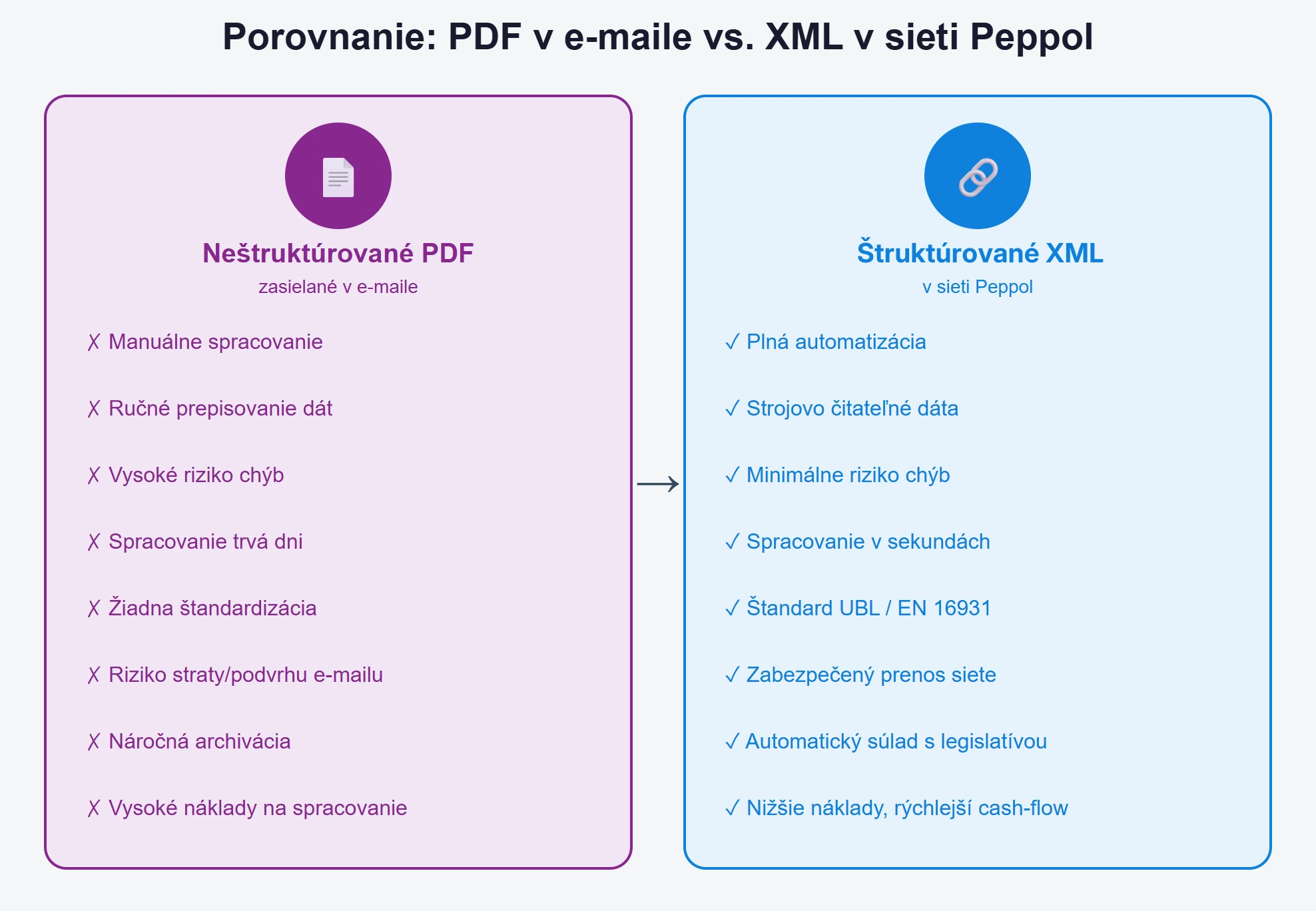
To this day, many businesses understand an “electronic invoice” to mean an invoice created in accounting software and sent by email as a PDF file. From 2027, however, this will no longer be sufficient.
A genuine e-invoice is a document issued, sent and received in a structured electronic format (XML). This format is designed to enable computers and accounting systems to read and process the data fully automatically, without the need for manual data entry.
Key terms you should know:
- XML / Peppol BIS 3.0: A standardised data format that complies with the European standard (EN 16931) for electronic invoicing.
- Peppol network: A secure international network designed for the electronic exchange of business and tax documents.
- Peppol ID: A unique identifier for your company within the Peppol network (in Slovakia, derived from the company’s tax identification number – DIČ).
- Digital postman (Access Point): A certified delivery service provider (such as MIBFORMA) through which your e-invoices are securely transmitted between the sender, the recipient and the state.
What obligations will apply to companies and businesses?
The legal framework for electronic invoicing is governed by Act No. 222/2004 Coll. on Value Added Tax, as amended. From 1 January 2027, the following clearly defined obligations will apply:
- Obligations for Senders (Suppliers): If you are a VAT payer and supply goods or services to another business (a domestic B2B transaction), you will be required to issue invoices exclusively in XML format and send them via an approved channel (the Peppol network). This obligation applies to standard and summary invoices, credit notes, debit notes, tax documents for advance payments received, and self-billing documents. Invoice data will also be transmitted to the Slovak Financial Administration in real time.
- Obligations for Recipients (Customers): Every company, business or self-employed person must be able to receive an electronic invoice in XML format – even if they do not issue e-invoices themselves or are not VAT payers, provided that they purchase goods or services from VAT payers.
- Archiving Obligation: The law requires invoices to be retained for 10 years, while ensuring the authenticity of their origin, the integrity of their content and their legibility throughout the entire retention period.
How can you prepare today?
January 2027 may seem a long way off, but adapting internal processes and software takes time. We recommend checking whether your accounting or ERP system is ready, confirming with your software provider how Peppol integration is planned, and selecting a certified Digital Postman well in advance.
Would you like to check whether your system is ready for E-Invoicing?
Download our free Digital Postman Readiness Checklist, available for SAP, non-SAP and SAP DRC solutions.
In the next article, you will learn: How electronic invoicing will work in practice – from issuing an invoice and sending it via the Digital Postman to its receipt.
E-Invoicing Readiness Checklist
Enter your e-mail and confirm your consent to the processing of personal data — the checklists unlock straight away. Feel free to take all three versions.
* marked fields are required
Pick the version that matches your system
The files unlock once you enter your e-mail and confirm your consent.